Why Systems Documentation Is the Missing Piece Successful Business Exit Planning Strategy


You've built something remarkable, but here's the uncomfortable truth: your business might be worthless without you in it. That realization hits hard when successful business owners start thinking about business exit planning, only to discover they've constructed a beautiful prison where they're both the warden and the inmate.
The irony cuts deep. You started your business dreaming of freedom, flexibility, and eventually, a profitable exit. Instead, you've become the linchpin holding everything together. Your phone rings at all hours. Decisions bottleneck at your desk. Vacation feels impossible because who else understands how things really work? You're not running a business anymore. The business is running you.
This scenario plays out in countless entrepreneurial journeys because most business owners focus on building revenue while neglecting to build the one thing that transforms a company from a job into an asset: comprehensive systems documentation. Without it, you're constructing a house of cards that collapses the moment you step away.
The Hidden Trap of Undocumented Success
Picture the typical growth trajectory of a small business. In the beginning, you wear every hat. You're the salesperson, the delivery expert, the customer service representative, and the bookkeeper. This isn't just necessary; it's how you learn your business intimately. You develop instincts, shortcuts, and workarounds that make operations flow smoothly. Everything exists in your head, accessible at a moment's notice.
This approach works brilliantly at first. You're nimble, responsive, and deeply connected to every aspect of your business. Customers love the personal touch. Problems get solved quickly because you understand all the moving parts. Revenue grows, and you hire people to help shoulder the load.
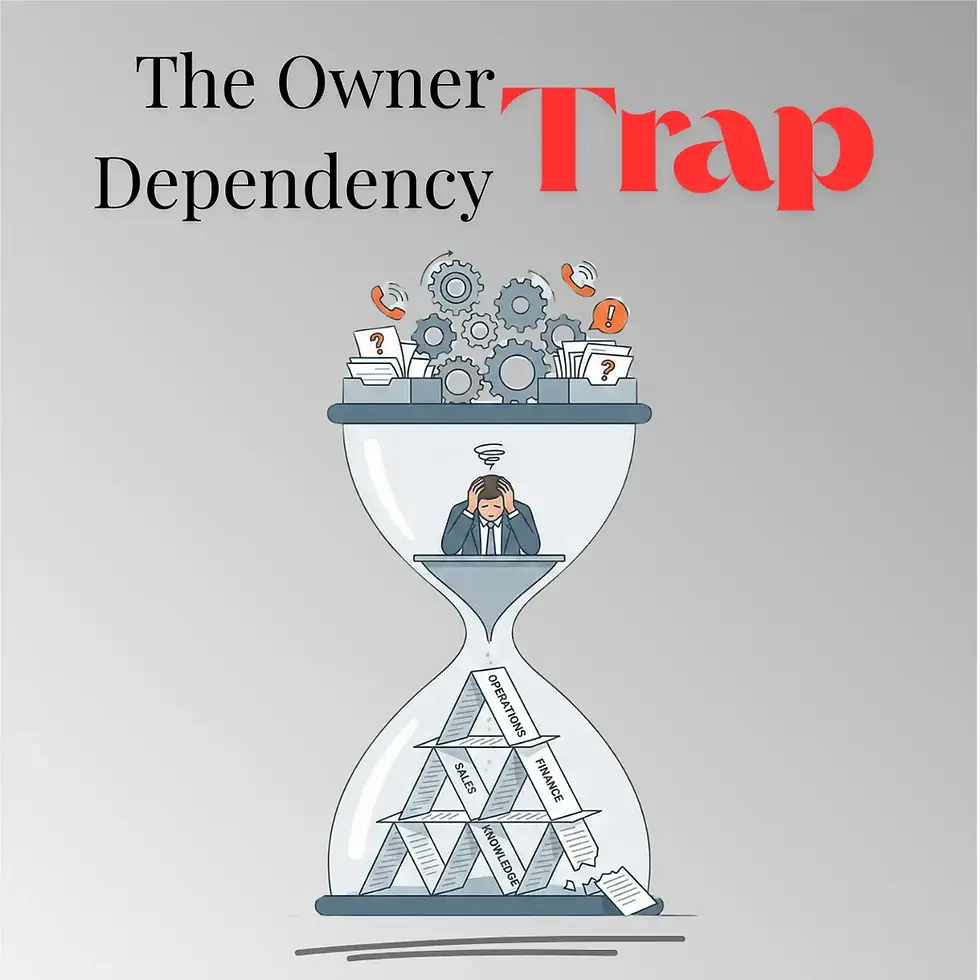
But here's where the trap springs shut. As you bring on team members, you train them through demonstration and verbal explanation. They shadow you, ask questions, and gradually take on responsibilities. When something unusual happens, they come to you. When a customer has a special request, they come to you. When a decision needs making, they come to you. You've successfully delegated tasks, but you haven't successfully transferred knowledge.
The result? You've created a team of people who can execute when everything goes according to plan, but who lack the framework to handle exceptions, make judgment calls, or truly operate independently. Your business has scaled in size but not in systems. You're still the bottleneck, just managing a bigger operation.
What Buyers Actually See
When potential buyers evaluate your business, they're not just looking at revenue and profit margins. They're assessing risk. Specifically, they're asking themselves one critical question: what happens when the current owner walks away?
If the honest answer involves chaos, declining quality, lost customers, or operational paralysis, you don't have a sellable business. You have an expensive job that requires your constant presence. Buyers aren't interested in purchasing a full-time commitment that depends entirely on institutional knowledge locked inside your head.
Think about it from their perspective. They're considering investing significant capital into acquiring your company. Every undocumented process represents a risk factor. Every procedure that exists only in your memory is a potential failure point. Every decision-making framework that you handle intuitively but haven't codified becomes a question mark in their due diligence process.
The businesses that command premium valuations share a common characteristic: they run smoothly with minimal owner involvement. Not because the owner is absent or disengaged, but because they've built systems that enable the business to operate independently. Documentation is the foundation of this independence.
The Transformation Power of Documented Systems
Systems documentation fundamentally changes how your business functions. It's not simply about writing down what you do; it's about creating a knowledge infrastructure that allows your business to scale, adapt, and ultimately thrive without your constant intervention.
When you document your processes systematically, you create several layers of value simultaneously. First, you force clarity in your own thinking. The act of articulating how something should be done reveals inefficiencies, redundancies, and gaps that remained invisible when processes lived only in your head. Writing things down exposes the difference between how you think something works and how it actually works.
Second, documentation enables genuine delegation. There's a profound difference between telling someone what to do and providing them with a framework they can reference, follow, and eventually improve upon. When team members have access to documented procedures, they can handle situations independently, make informed decisions within established guidelines, and solve problems without constantly seeking your input.
This shift transforms your role from firefighter to architect. Instead of spending your days answering questions, resolving issues, and making operational decisions, you can focus on strategy, innovation, and growth. Your time becomes available for the high-value activities that actually build business worth.
Beyond the Operations Manual
Many business owners hear "systems documentation" and imagine a boring operations manual gathering dust on a shelf. That misconception prevents them from understanding what comprehensive documentation truly encompasses.
Effective systems documentation captures the complete knowledge architecture of your business. This includes the obvious operational procedures, certainly, but it extends far beyond basic how-to guides. True documentation covers decision-making frameworks, customer relationship protocols, quality standards, troubleshooting guides, vendor relationships, financial processes, sales methodologies, and the reasoning behind why things are done certain ways.
The "why" component often gets overlooked, yet it's crucial. When your documentation explains not just the steps but the logic behind them, team members can adapt procedures intelligently when circumstances change. They understand the principles, not just the actions. This creates a learning organization where people can think critically and make sound judgments aligned with your business philosophy.
Consider the difference between these two approaches. In one business, a team member follows a step-by-step customer onboarding checklist. They execute each item dutifully. In another business, the documentation explains the customer onboarding philosophy, the goals of each interaction, the common concerns customers have at different stages, and how to recognize when someone needs additional support. The first approach creates task-completers. The second approach develops problem-solvers.
The Economics of Documentation When Business Exit Planning
The financial impact of systems documentation extends throughout your business in ways that dramatically affect both current operations and future valuation.
From an operational standpoint, documented systems reduce errors, increase consistency, and accelerate training. New team members can become productive more quickly when they have comprehensive resources to reference. Experienced team members make fewer mistakes when they can verify procedures rather than relying on memory. Quality remains consistent even as your team grows or changes.
These operational improvements directly impact your bottom line. Fewer errors mean less waste, fewer customer complaints, and lower costs. Faster training reduces the time and expense of bringing new people up to speed. Consistent quality leads to higher customer retention and better word-of-mouth marketing.
But the most significant financial impact appears when you consider the sale value of your business. The presence or absence of comprehensive systems documentation can influence your business valuation by substantial multiples. This isn't speculation or exaggeration; it reflects the fundamental math of business valuation.
Understanding the Buyer's Calculation
Business valuations typically factor in something called owner dependency risk. When a business is heavily dependent on the owner's personal involvement, buyers apply a discount to account for the uncertainty of post-sale performance. This discount can be significant because the risk is real and substantial.
Conversely, when a business demonstrates that it can operate effectively without constant owner involvement, that's when documented systems serve as proof, buyers perceive less risk and are willing to pay more. They're not just buying your current cash flow; they're buying a sustainable operation with transferable value.
Documentation also streamlines the due diligence process, making your business more attractive to serious buyers. When potential acquirers can review comprehensive system documentation, they gain confidence more quickly. They can verify that your business operates on solid foundations rather than personal heroics. This clarity makes the transaction smoother and supports stronger valuations.
Moreover, businesses with excellent documentation attract better quality buyers. Strategic acquirers and private equity firms specifically look for well-systematized operations because they understand these businesses scale more effectively. They're willing to pay premium prices for companies that demonstrate this level of organizational maturity.
Starting the Documentation Journey
The prospect of documenting everything about your business can feel overwhelming. Where do you begin? How much detail is necessary? How do you find time for this when you're already stretched thin?
These questions stop many business owners before they start.
The key is recognizing that systems documentation isn't an all-or-nothing proposition. You don't need to document everything at once. In fact, attempting to do so usually leads to burnout and abandoned efforts. Instead, approach documentation as an ongoing practice that becomes woven into how your business operates.
Begin with your most critical processes, the activities that most directly impact customer satisfaction, revenue generation, or operational efficiency. These are your high-leverage documentation opportunities. When you systematize these core functions first, you see immediate benefits that justify continued investment in documentation.
One effective approach involves documenting processes as you're actively working on improving them. When you notice something that could be more efficient, don't just fix it mentally, capture the improved process in writing. This approach serves double duty: you're making operational improvements while simultaneously building your documentation library.
The Documentation Mindset
Building a culture of documentation requires shifting how you and your team think about work. Instead of simply doing tasks, you develop the habit of capturing knowledge as you go. This mindset recognizes that today's solution to a problem becomes tomorrow's standard operating procedure.

Encourage your team to contribute to documentation. The people actually performing tasks often understand the practical nuances better than anyone else. When they document what they do, you gain valuable insights while fostering ownership and engagement. Documentation becomes a team effort rather than a burden you carry alone.
This collaborative approach serves another crucial purpose: it ensures your documentation stays current and relevant. Business environments change constantly. Customer needs evolve. Technology advances. Market conditions shift. Documentation that's treated as a living resource rather than a static artifact remains useful and valuable over time.
Regular review and updates should be built into your operational rhythm. Perhaps quarterly reviews where teams assess their documented procedures, identify what's working, what needs adjustment, and what new processes should be added. This keeps your systems documentation accurate and actionable.
The Time Horizon Reality
Here's a truth that many business owners discover too late: preparing your business for sale takes much longer than you expect. When you decide you're ready to exit, you can't simply flip a switch and have everything in order. The businesses that achieve premium valuations and smooth transitions invested years in building the infrastructure that made those outcomes possible.
This timeline reality makes the decision to start documenting systems now crucial, regardless of your immediate exit plans. Even if you think you're five or ten years away from considering a sale, starting your documentation process today positions you for better outcomes down the road.
Think about it as compound interest for your business value. Every system you document, every process you refine, every piece of institutional knowledge you capture adds incremental value. Over time, these increments compound into substantial differentiation between your business and competitors who remain owner-dependent.
The businesses that struggle most during sales processes are those where the owner suddenly realizes they need to document everything as they're trying to sell. This creates a frantic scramble that usually results in incomplete, rushed documentation that fails to impress buyers. Worse, it highlights exactly how owner-dependent the business truly is.
Documentation as Business Intelligence
Beyond sale preparation, comprehensive systems documentation provides ongoing competitive advantages that improve your business whether or not you ever sell. This perspective shift is important because it reframes documentation from a future-focused business exit planning into a present-day operational advantage.
When your systems are well-documented, you can experiment more effectively. You have a baseline to measure against when you try new approaches. You can train people faster, which means you can grow more quickly when opportunities arise. You can maintain quality as you scale because excellence isn't dependent on any single person's presence.
Documentation also protects you from key person risk beyond just yourself. When critical knowledge exists only in individual team members' heads, you're vulnerable to their departure, illness, or unavailability. Documented systems distribute knowledge throughout your organization, creating resilience and stability.
This resilience proves valuable in scenarios you might not anticipate. What happens if you need to step away temporarily for personal reasons? What if a key employee leaves unexpectedly? What if you want to open a second location? Documented systems provide the foundation that allows your business to handle these situations without crisis.
The Professional Advantage
While the principles of systems documentation are straightforward, the execution often benefits from professional guidance. Just as you wouldn't attempt to navigate complex legal or financial matters without expert advice, preparing your business for maximum value requires specialized knowledge.
Professional business advisors who specialize in business exit planning and business valuation bring several critical advantages to the documentation process. They understand what buyers look for, which systems matter most, how to structure documentation for maximum impact, and how to integrate systems preparation into your broader business strategy.
Perhaps more importantly, they provide accountability and momentum. It's easy to let documentation slip to the bottom of your priority list when daily operational demands compete for attention. Working with professionals creates structure and commitment to a process that might otherwise get perpetually postponed.
These advisors also help you see blind spots. When you're deeply embedded in your business, it's difficult to identify which processes truly need documentation versus which ones you've simply always done a certain way. Outside perspective reveals opportunities and priorities you might miss on your own.
The Valuation Connection
One of the most valuable services professional advisors offer is helping you understand your current business valuation and how systematic improvements, including documentation, can increase that number. This isn't about generating an arbitrary figure; it's about understanding the specific factors that drive value in your particular business and industry.
A professional business valuation serves as both a baseline measurement and a roadmap. It shows you where you stand today and identifies the specific improvements that would have the greatest impact on future valuation. Systems documentation consistently appears as a high-leverage improvement area because it directly addresses one of the biggest concerns buyers have.
Understanding your valuation early, well before you need to sell, gives you time to make strategic improvements that dramatically affect your ultimate business exit planning outcome. The difference between a business that's systematically prepared for sale and one that isn't can represent hundreds of thousands or even millions of dollars in additional value, depending on your business size and industry.
Taking Action Today
The businesses that achieve remarkable business exit planning outcomes share a common characteristic: their owners started preparing long before they needed to sell. They recognized that building a valuable, sellable business isn't something you do in the final months before listing it for sale. It's something you build intentionally over years.
Systems documentation stands at the center of this preparation. It transforms your business from something dependent on your daily presence into an asset that operates independently. This transformation doesn't happen overnight, but every step you take compounds into increasing value and decreasing owner dependency.
The question isn't whether you should invest in systems documentation. The question is whether you're willing to continue being the bottleneck in your own business, limiting both your current quality of life and your future business exit planning options. The answer to that question determines whether you remain trapped in your business or position yourself for a rewarding business exit planning when the time comes.
Starting this journey requires honest assessment of where you currently stand. How dependent is your business on your personal involvement? Which critical processes exist only in your head? What would happen if you needed to step away for an extended period? These questions provide clarity about your documentation needs and priorities.
The path forward involves commitment to building systems thinking into your business culture, dedicating resources to capturing and maintaining documentation, seeking professional guidance to ensure you're addressing the factors that matter most for valuation, and maintaining patience and persistence as you build this infrastructure over time.
Your business represents years of effort, investment, and dedication. Doesn't it deserve to be positioned for maximum value when the time comes to transition? Systems documentation isn't just about preparing for a sale; it's about building a business that serves you instead of demanding your constant service. It's about creating options, reducing stress, and maximizing the return on everything you've invested.
The businesses that achieve premium valuations and smooth ownership transitions didn't get there by accident. They were systematically prepared by owners who understood that documentation is the bridge between an owner-dependent operation and a valuable asset. The question you need to answer is simple: will your business be one of them?
Discover Your Business's True Value
Understanding where your business stands today is the first step toward maximizing its future value. A professional business valuation reveals not just a number, but a strategic roadmap for increasing that number through systematic improvements.
Take control of your business's future. Whether you're planning to exit in two years or ten, knowing your current valuation and the specific steps that would increase it puts you in the driver's seat. Don't wait until you're ready to sell to discover your business isn't ready to be sold.
Schedule a confidential conversation to explore how systems documentation and strategic preparation can transform your business value. Your future self will thank you for starting today.



Comments